AI Patch Management: Prioritise Updates Across a Private Avatar Stack
AI patch management for a private avatar should prioritise the vulnerabilities that can actually affect the deployed service, then release each fix as a tested change to the whole conversational stack. A high severity score is useful evidence, but it is not the decision. Teams also need to know whether the affected component is present, reachable, exploitable, privileged and connected to sensitive data or a critical service path.
The practical output is a patch decision record for every material advisory. It links the vulnerable component to the affected avatar releases, documents the exposure and business impact, chooses a remediation lane, identifies compensating controls, names the approver and records the evidence that the fix worked.
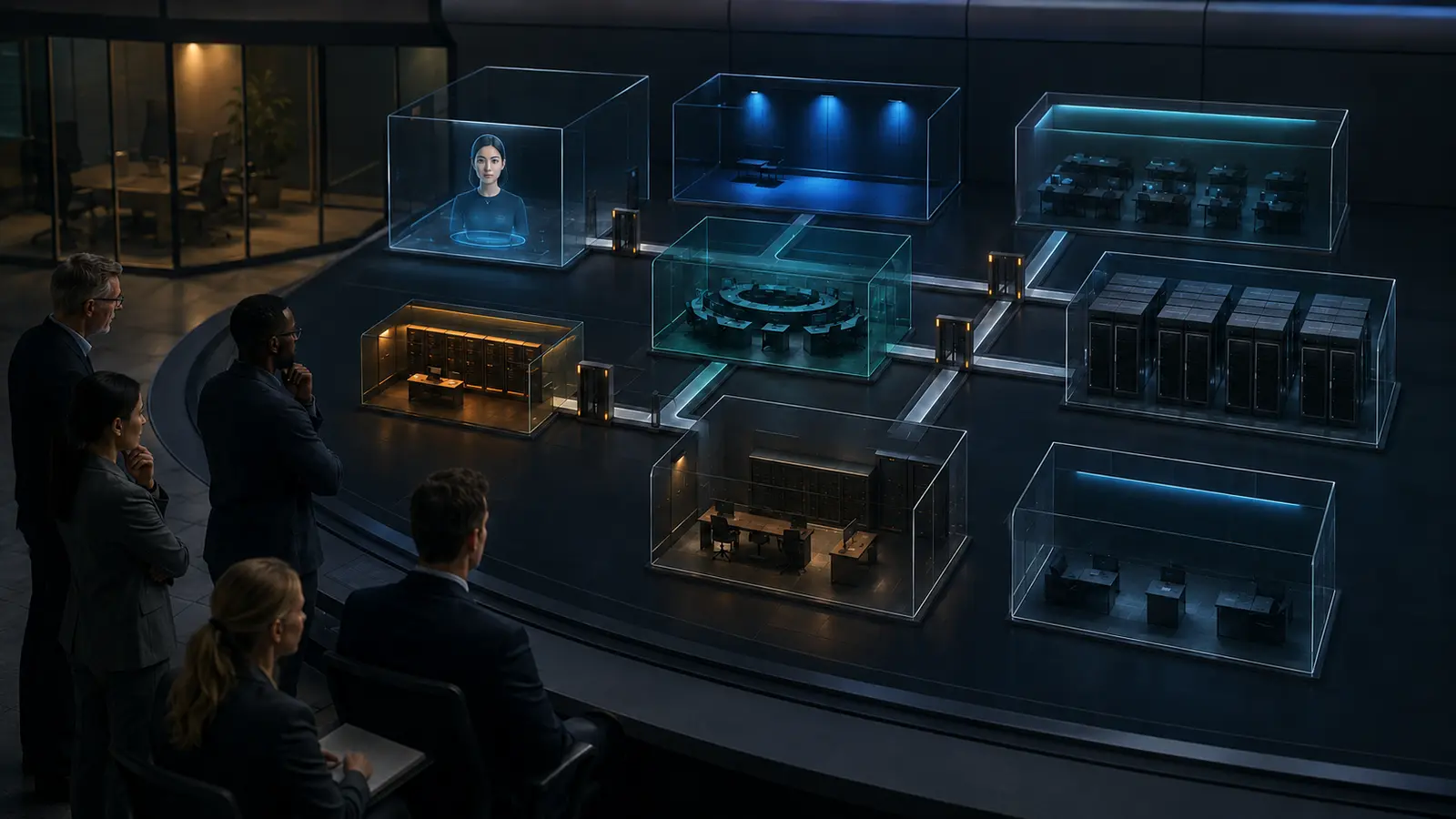
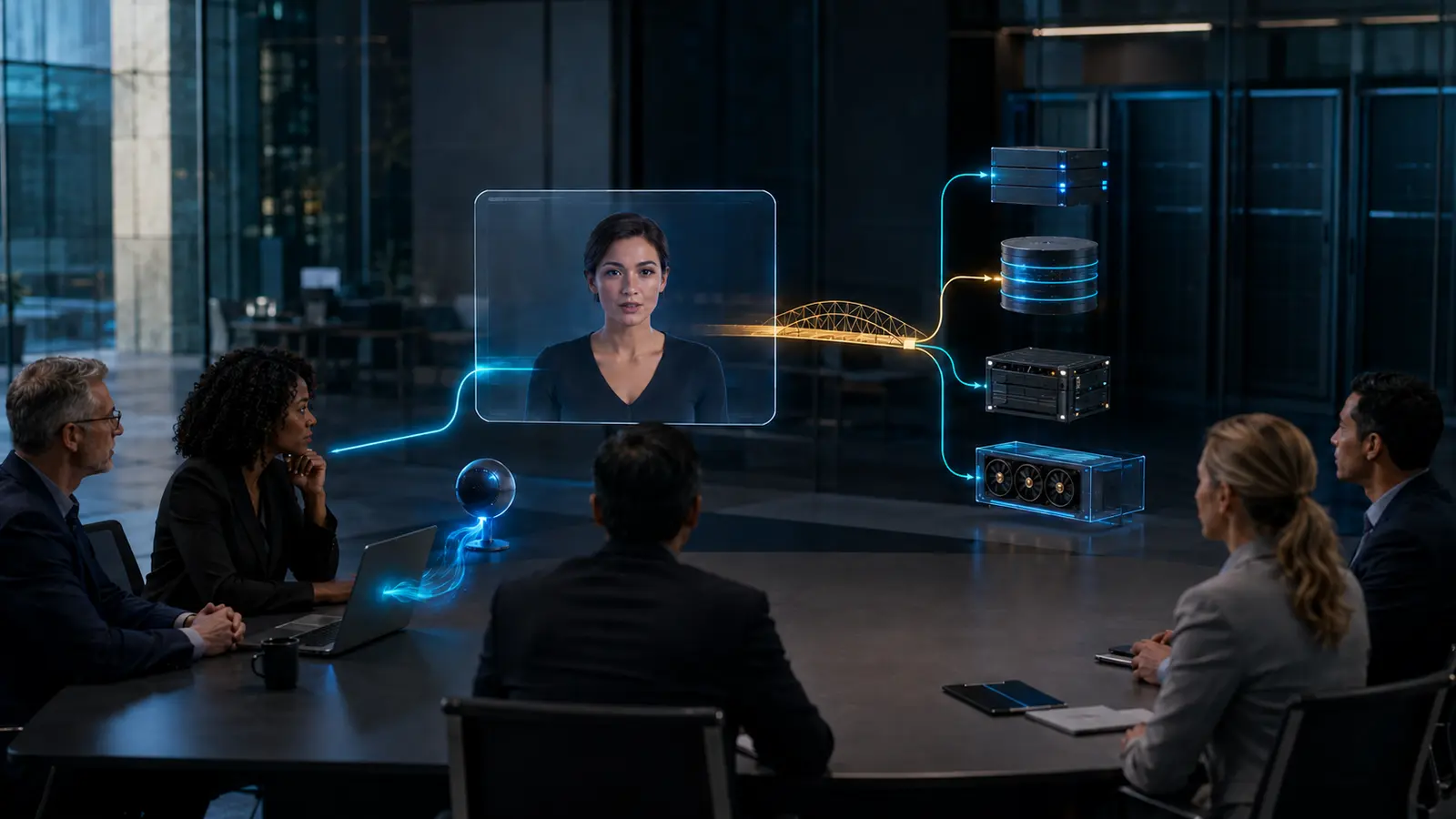
This matters because an enterprise avatar is not one application. It can combine browsers or kiosks, WebRTC, speech recognition, retrieval, a language model, text-to-speech, avatar rendering, GPU drivers, container images, identity services and observability. Patching any one layer can change security, latency, compatibility or user behaviour.
Patch management is not the same as model updating
A security patch corrects a vulnerability or reduces an exposed weakness. A model upgrade may improve accuracy or capability. A configuration change alters how an existing release behaves. In practice, one release can contain all three, but the trigger and approval should remain visible.
Yepic’s guide to updating on-premise AI avatars with rollback explains how to release an immutable compatibility set. Patch management starts earlier: it receives advisories, proves applicability, determines urgency and decides whether to patch, mitigate, replace or accept the risk. Configuration-drift control then checks that the approved remediation is what production actually runs.
NIST SP 800-40 Revision 4 defines enterprise patch management as identifying, prioritising, acquiring, installing and verifying patches, updates and upgrades. It frames patching as preventive maintenance, not an occasional emergency. The NIST guidance also stresses shared responsibility between mission owners and security or technology teams—an important point when an urgent fix can interrupt a public or customer-facing avatar.
Inventory eight patch surfaces
A normal vulnerability scanner sees only part of an avatar. Build the intake process around the full release inventory.
- Client and channel: managed browsers, kiosk operating systems, microphone and camera middleware, mobile clients and embedded pages.
- Media and network: signalling, STUN and TURN services, codecs, media servers, reverse proxies, DNS and certificate-handling components.
- Application services: session orchestration, API gateways, retrieval services, action gateways, administration interfaces and human-handover integrations.
- Models and model-serving code: speech, language, moderation, translation, voice and rendering artefacts, plus tokenisers, serialisation libraries and inference servers.
- GPU and host stack: firmware, operating system, kernel, GPU driver, accelerator libraries, container runtime and orchestration platform.
- Data services: document stores, vector databases, caches, queues, backups and knowledge-ingestion pipelines.
- Identity and security services: SSO connectors, workload identity, secrets brokers, key-management clients, policy engines and logging collectors.
- Supply and administration plane: registries, build tools, package managers, update services, remote-support tooling and observability platforms.
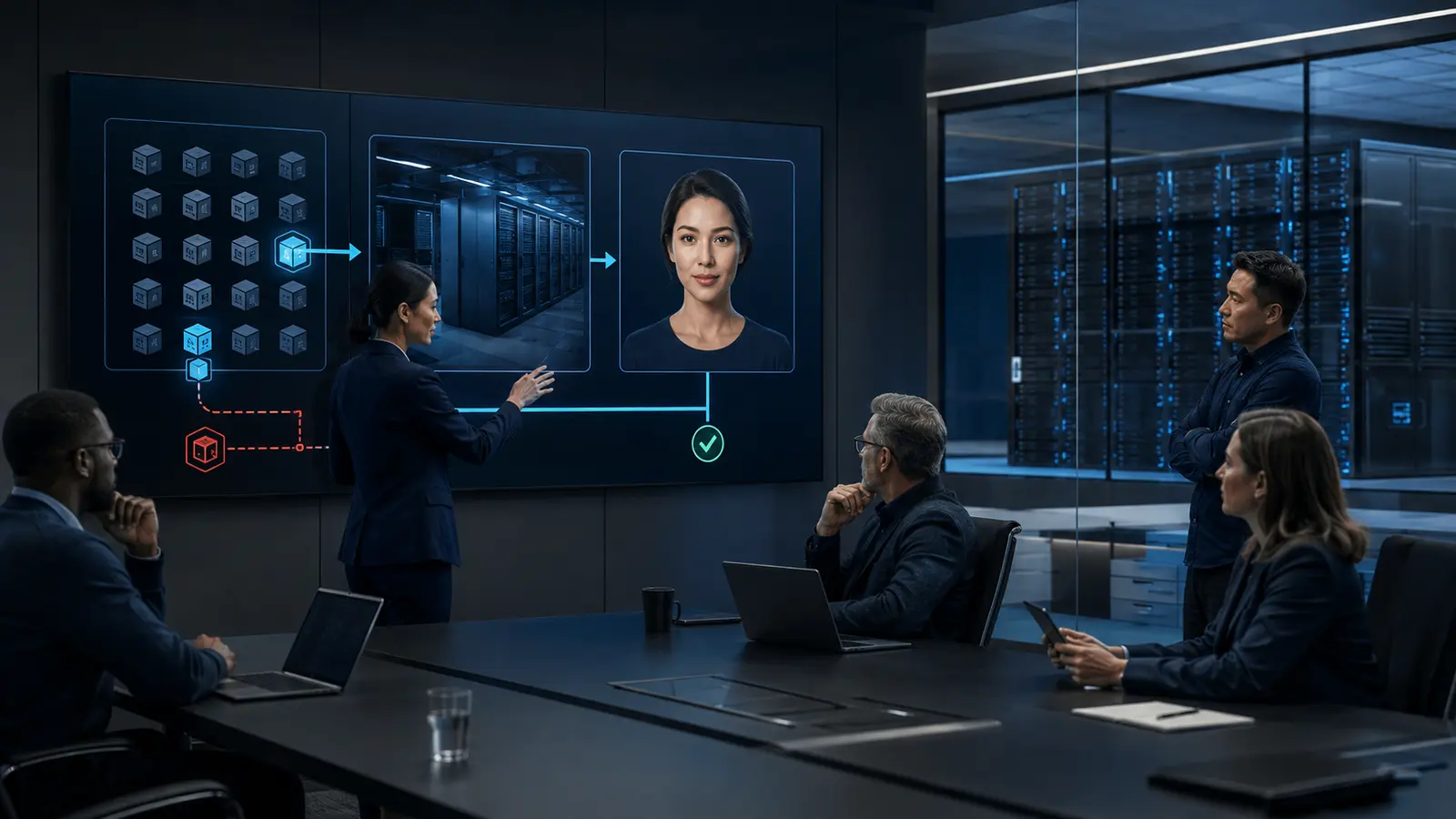
Connect these surfaces to a release-specific AI bill of materials. The inventory must identify versions, hashes, owners, support status and relationships. “We use library X” is not enough; the team must know which production bundles contain it and whether the vulnerable function is invoked.
Do not turn CVSS into an automatic queue
CVSS is designed to communicate vulnerability severity. The official CVSS v4.0 user guide is explicit that a Base score measures severity, not risk, and should be supplemented with Threat and Environmental metrics.
For an avatar deployment, assess six questions together:
- Applicability: is the exact vulnerable product, version, configuration or code path in the approved release or runtime?
- Exploitation: is exploitation active, publicly demonstrated or credible for the deployed platform?
- Reachability: can an internet user, untrusted media input, tenant, internal workload or administrator reach the affected interface?
- Authority: what privileges, credentials, GPU access or data paths does the component possess?
- Service impact: could exploitation expose conversations, alter answers, impersonate the avatar, call enterprise tools or remove availability?
- Existing controls: do segmentation, workload identity, feature disablement, allow-lists or a safe reduced-service mode materially reduce the route?
The US Cybersecurity and Infrastructure Security Agency says its Known Exploited Vulnerabilities catalogue should be an input to prioritisation. It is valuable evidence of exploitation, not proof that every listed product exists or is exposed in a particular avatar environment.
Use four remediation lanes
1. Emergency
Use this lane when credible active exploitation meets a reachable, consequential component. Reduce exposure immediately where possible: disable the affected feature, block the route, rotate related credentials, isolate nodes or move to an approved reduced-service state. Run the defined minimum regression pack, release through an accelerated approval and retain a tested backout path.
2. Accelerated
Use this for serious, applicable vulnerabilities without evidence of immediate exploitation in the deployment. Schedule the earliest practical change window, validate compatibility and monitor threat information until remediation is complete.
3. Routine
Use the normal maintenance cadence for lower-risk findings that are present but not materially exposed. Routine does not mean indefinite. Give the decision an owner, a target release and an expiry.
4. Mitigate, replace or accept
A patch may be unavailable, incompatible or tied to end-of-life software. Remove the vulnerable function, restrict reachability, replace the component or record time-bound risk acceptance at the correct seniority. The NCSC’s vulnerability-management guidance, reviewed on 1 May 2026, states that the organisation must own the risk of not updating.
Test the avatar journey before promoting the patch
A package manager reporting “installed” proves only that installation completed. Verification must cover security and the live interaction.
- Confirm the vulnerable version, function or exposure is absent.
- Re-scan the immutable candidate bundle and verify publisher signatures or approved hashes.
- Test authentication, tenant separation, retrieval permissions and tool authorisation.
- Exercise direct and relayed media paths, browser support, captions and microphone recovery.
- Measure speech, reasoning, voice, rendering and end-to-end tail latency under representative concurrency.
- Check GPU memory, cold starts, failover, queues and reduced-service behaviour.
- Run required languages, accents, pronunciation, refusal, handover and safety evaluations.
- Prove that rollback restores a compatible release, data schema and configuration—not just an older container.
The NCSC’s secure AI operation guidance recommends modular update procedures and warns that changes to data, models or prompts can change behaviour. The same principle applies when a library, driver or media component changes underneath the model.
Handle restricted networks as a controlled supply route
A disconnected or restricted production network still needs vulnerability intelligence and security fixes. Define an authorised route for advisories and signed artefacts to cross the boundary. Use a connected intake environment to acquire updates, verify source and signatures, scan the bundle and create a manifest. Transfer it through quarantine, repeat the checks inside the boundary and promote only the approved bundle to the local registry.
Return minimal status evidence—such as release identifiers, scan results and success or failure—without exporting customer conversations. Yepic’s restricted-network avatar design guide covers the broader dependency and transfer problem. Fully disconnected operation is not a universal product property; it requires a component-by-component custom design.
Cloud and customer-hosted patching divide responsibility differently
In a public or private managed service, the provider may patch more of the operating stack and absorb compatibility testing. The customer still needs evidence about notification, material changes, client requirements, maintenance impact and residual responsibilities.
Customer-hosted deployment can give a bank or government team direct control over timing, testing, network exposure and GPU infrastructure. It also assigns that team more work: monitoring advisories, maintaining local registries, validating hardware combinations, staffing emergency releases and retaining supported versions. On-premise is not automatically faster to patch. A well-operated managed service may remediate common infrastructure sooner; a governed private deployment may offer more control where local constraints matter.
On 1 May 2026, the NCSC warned organisations to prepare for a higher volume of vulnerability patches, prioritise external attack surfaces and be ready to update quickly and at scale. That makes an explicit provider–customer responsibility matrix more valuable than a promise that a platform is simply “secure”.
Keep a patch decision record
For every material advisory, record the identifier and source, affected component and versions, impacted release and environment, applicability evidence, exploitation evidence, exposure path, potential service impact, chosen lane, compensating controls, owner, deadline, approval, candidate release, required tests, rollout method, rollback trigger and final verification.
Close the record only after production state matches the approved release and monitoring shows the intended outcome. Link the change to the release BOM, configuration baseline and incident record where relevant. If the finding is a false positive, retain the applicability evidence so it does not have to be rediscovered during the next scan.
Twelve questions for the next patch review
- Can the team identify every production release containing the affected component?
- Is the vulnerable function actually invoked in this configuration?
- Which user, workload or network path can reach it?
- Is there evidence of active exploitation or a credible public exploit?
- What data, privileges and downstream services could be affected?
- Can exposure be reduced safely before the patch arrives?
- Who owns the decision if the update is deferred?
- Does the candidate remain compatible with the approved GPU and model stack?
- Which end-to-end conversation tests are mandatory?
- How will the service be patched without abandoning active sessions?
- Can the previous known-good compatibility set be restored?
- Can operations prove which version is effective on every production node?
Make patch readiness part of deployment design
The Abu Dhabi Aviation and Oracle enterprise avatar integration involved development and production environments, APIs and iframe integration, real-time streaming, captions, microphone behaviour, WebRTC and network testing, browser remediation, cybersecurity support and ongoing maintenance. Those layers demonstrate why a fix can affect far more than an AI endpoint.
The project is not evidence of a completed customer-hosted patch-management implementation. Yepic’s private, sovereign and on-premise avatar deployments are custom projects. The precise update boundary depends on the selected speech, language, voice, rendering, media, GPU and enterprise components, plus the customer’s operating model.
For architecture and procurement teams, the decisive test is simple: when a critical advisory arrives, can the organisation identify every affected avatar release, reduce exposure, test the fix and prove production state before the decision window closes? If not, patch management is still an improvised incident process rather than a production capability.